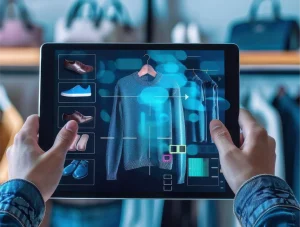
Key Takeaways on Retail Automation
| Retail Automation is Essential for Scale and Experience: Automation, involving hardware, software, and AI, is imperative for the modern retail market. It shifts retailers from error-prone manual tasks to proactive insights, enhancing operational efficiency, accuracy, and customer throughput. AI is the Core Technology Driver: AI and Machine Learning are crucial, driving better business outcomes and customer loyalty. AI/ML enables demand forecasting, real-time personalization, predictive scheduling, and dynamic inventory alignment, all of which are key to reducing waste and improving customer engagement. The Goal is a Streamlined and Personalized Experience: Automation directly enhances the customer journey by facilitating frictionless checkout (e.g., smart carts, vision-based systems) and personalized interactions. Internally, it streamlines operations, improves inventory management, and reduces shrinkage. Successful Adoption Requires a Phased Strategy: Retailers must start by assessing current pain points to prioritize high-ROI use cases. Successful implementation involves choosing the right technology for the store format, maintaining a human-centric approach to staff training, and designing for seamless integration (API-first) with existing POS and inventory systems. |
The global retail industry market is projected to climb aggressively to USD 52.65 trillion by 2035. Yet, many retailers still run stores with manual stock counts, labor-heavy restocking, and checkout bottlenecks. In an era where throughput, consistency, and experience define competitive edge, automation becomes imperative.
Retail automation changes this narrative. It refers to deploying hardware, software, sensors, and intelligent agents to execute or assist in retail tasks, such as inventory cycles, shelf replenishment, loss detection, checkout, workforce assignment, and customer engagement with minimal manual intervention. It elevates processes and tasks where humans spend time, turning reactive labor into proactive insights when done properly.
In this blog, let us explore what retail automation is and how it is responsible for reshaping the next-gen customer shopping experience.
Importance of Retail Automation in Modern Shopping
Retail automation powers transformation across both operations and experience.
Enhancing Efficiency and Accuracy
Manual processes are slow, error-prone, and scale poorly. Instead, automated cycle counts, shelf sensors, or RFID systems raise inventory accuracy, drastically reducing stockouts and overstock.
Improving Customer Experience Through Technology
Customers expect frictionless checkout, real-time availability, and a consistent experience. Automation supports fast lanes, smart carts, and ‘grab-and-go’ flows.
But the magic lies in how systems anticipate, assist, and rescue. For example, if in retail, a customer goes online and asks for product information at an odd hour, instead of a ‘sorry, we’re out’ response, automation reduces wait times and enables better associate interactions.
Key Technologies Driving Retail Automation
The technologies used behind automated analytics in retail define what retail automation is in practice. They help with:
AI and Machine Learning in Retail
AI/ML engines drive demand forecasting, hyperlocal replenishment, predictive labor scheduling, and real-time offer personalization. In retail, AI-driven insights reduce over-ordering and align inventory dynamically with local demand.
IoT and Smart Devices
Edge IoT sensors, shelf weight monitors, Bluetooth tags, and smart cameras feed continuous signals. These devices detect misplaced items, temperature anomalies (in perishables), aisle congestion, or merchandise movement. The richer the signal, the smarter the system can react, for example, in triggering immediate restock alerts or dynamic shelf pricing.
Robotics and Automated Checkout
Robotics handles labor-intensive tasks, such as floor cleaning, shelf stocking, goods-to-person micro-fulfillment, or autonomous carts. On the checkout front, automatic vision-based checkout and smart carts are evolving rapidly.

Benefits of Implementing Retail Automation
Here are the top three ways retail automation transforms operations, enhances customer engagement, and enables smarter, data-driven decision-making across the value chain.
Streamlined Operations and Inventory Management
Automation reduces manual cycle count labor, avoids blind reorders, and improves shelf fill rates. This leads to lower shrinkage, less safety stock, and leaner backroom space.
Personalized Customer Interactions
Armed with real-time product visibility and shopper signals, staff or systems can suggest relevant offers mid-journey, upsell, cross-sell, offer replenishment reminders, or offer personalized discounts. Smart carts or mobile apps can update in-aisle suggestions as customers scan or browse.
Data-Driven Decision Making
Automation surfaces high-resolution data: heat maps of foot traffic, shelf dwell times, exception logs, and shrink patterns. Also, automation helps unify POS, CRM, and supply chain data under one feedback loop.

Scaling Corporate Gifting with Seamless Automation
With TechBlocks as their partner, Giftagram’s B2B transition was facilitated smoothly. The addition of a white label product configuration feature elevated operations, enhancing gifting experiences and internal efficiency.
Steps to Adopt Retail Automation Successfully
To move from vision to execution, retailers can follow these steps:
Step 1: Assess Current Retail Processes
Begin by mapping workflows and quantifying pain: how much labor is spent in inventory counts, how many ‘out-of-stock’ hours a day, queue wait times, or queue abandonment rates. Pilot in a few stores to measure baseline. Use that to prioritize use cases with the highest ROI potential.
Step 2: Choose the Right Automation Solutions
Match solutions to store format, SKU mix, traffic density:
- Inventory: RFID and mobile readers for general merchandise; shelf sensors or weight-based sensing in fast-moving categories.
- Front-end checkout: limited-item self-checkout for small baskets; smart carts for mid-sized baskets; vision-based checkout in small formats.
- Loss prevention/shrink: Computer vision exception alerts tied with POS to flag anomalies.
Step 3: Staff Training and Change Management
Design for humans. Train staff to intervene quickly, resolve exceptions, and assist customers. Make dashboards visible by tying them to measurable adoption metrics. In pilot phases, embed feedback loops so associates flag UX issues daily.

Conclusion
Retail automation is the foundation of operational excellence, resilience, and customer delight. Manual processes, rising labor costs, and inconsistent in-store experiences are barriers that modern retailers can no longer afford.
TechBlocks bridges these gaps through cloud-native architectures, API-first integrations, and retail domain expertise, connecting every layer of your ecosystem. We help brands move beyond automation pilots to scalable, measurable transformation.
Transform your stores into intelligent, self-optimizing environments.
Schedule a call to reshape your automation journey before your competition does.
FAQs on Retail Automation
When automation reduces wait time, avoids out-of-stocks, and maintains intuitive rescue paths, satisfaction rises. But automation errors (mis-scans, system downtime) erode trust faster than slow processes. That’s why hybrid design is critical.
Yes, modern automation is API-first, enabling integration with POS, WMS, inventory, and loyalty systems. Many retailers run mixed models, such as automated lanes in higher footfall stores, smart carts in large-format stores, and manual lanes in low-volume formats.
While implementing a new automated system in their funnels, businesses sometimes overlook change management and staff buy-in, choose tech that’s misaligned with basket size or store traffic, and treat shrink purely as a technical issue.