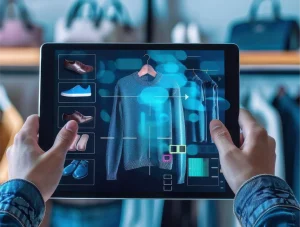
Shoppers today no longer settle for flat product pages or static catalogues. They expect experiences. Yet many retailers still depend on outdated digital touchpoints that fail to inspire or differentiate. The result translates to higher return rates, declining loyalty, and missed opportunities in moments where purchase decisions are made.
Virtual reality (VR) is shifting that equation. According to Statista, the global VR market is projected to reach USD 123.06 billion by 2032, driven by consumer demand for immersive shopping experiences. Already, many shoppers say they’re willing to pay more if they can try products virtually. Retailers that ignore this shift risk losing ground to competitors who are making shopping interactive, memorable, and frictionless.
This blog examines how retail virtual reality operates, where it’s delivering results, and why now is the time for leaders to act decisively.
Introduction to Retail Virtual Reality
Retail virtual reality (VR) refers to the use of VR technologies to enhance the immersive shopping experience. Customers can use VR headsets or apps to enter a 3D store and interact with products in a virtual environment. This blends online convenience with the feel of an in-store shopping experience.
Importance of Virtual Reality for Shopping in Modern Retail

Transforming the Retail Experience with VR
- Immersive VR in Retail Environments: VR enables customers to explore virtual stores as if they were physically present, allowing shoppers to walk around and examine items. VR head-mounted sets accounted for 62% of the VR retail market share in 2023, reflecting how shops use them for these 360° experiences.
- Enhancing Customer Engagement through VR Experiences: VR makes shopping more engaging. Customers viewing products in VR are 27% more likely to place an order and 65% more likely to make a purchase.
- AI + VR Synergy in Retail: Personalized AI can recommend products in a virtual store or customize the layout to your tastes. Analysts say integrating with cloud and 5G, AI-VR experiences can be delivered smoothly
Key Use Cases of Virtual Reality in Retail
| Virtual Product Experiences | Additional VR Applications |
| Virtual Try-On: VR/AR mirrors display clothes, glasses, or makeup on you in real-time. Virtual Showrooms: 3D showrooms for furniture or cars, letting you inspect products virtually. Smart Fitting Rooms: VR mirrors allow instant outfit changes without physical trials, improving convenience. | Interactive Store Maps: Virtual maps enable customers to quickly locate products. Virtual Training: VR simulations let employees or customers practice tasks safely |
Real-World Examples of VR Adoption in Retail
These are some cases that highlight how virtual reality for shopping drives higher conversion, stronger engagement, and brand innovation.
- IKEA’s Virtual Home Design Tool:
IKEA Place, built on Apple’s ARKit, lets users virtually place furniture in their rooms. The app boosted purchase confidence, as customers using 3D previews were 65% more likely to make a purchase, and returns dropped by nearly 20%. This digital milestone supported IKEA’s EUR 35 billion business while enabling smaller store formats backed by distribution centres.
- Lowe’s Holoroom for DIY Project Visualization:
Lowe’s VR Holoroom allowed customers to practice DIY tasks with lifelike feedback. The 2017 pilot found that novices improved to the level of memory retention of experts. Trained customers were 36% more confident in completing projects, which directly translated into higher sales of home improvement tools and materials, and reduced abandoned purchases in-store.
- Tommy Hilfiger’s Virtual Store Experience:
Tommy Hilfiger launched a multi-metaverse hub across Decentraland, Roblox, and more, featuring VR stores, NFTs, and AR try-ons. The project expanded digital reach and brand differentiation. Customer Engagement rates doubled in early campaigns, and new NFT-driven revenue streams contributed to a 20% lift in online traffic during Metaverse Fashion Week.

Challenges and Considerations in VR Adoption

Case Study: Building a Successful Ecommerce Startup With a Real Estate Innovator
The Future of Virtual Reality in Retail
By 2030, experts predict VR will be commonplace. One report warns that every retail touchpoint could become an interactive and immersive experience. We may have routine VR fitting rooms, virtual malls, and metaverse product launches. Retailers who delay VR risk being left behind; early adopters will set the pace.
Emerging Trends in VR Retail Experiences
- VR hardware will continue to improve and become more affordable.
- Standalone VR and AR glasses will make immersive shopping accessible.
- Cloud and 5G enable high-quality VR everywhere.
- We can also expect social VR shopping and voice interactions.
Integration of AI and AR with VR in Retail
In the near future, VR will blend with AI and AR. For example, you might use AR to find items, then switch to a VR demo. AI will personalize this path. Reports indicate significant investment in combined AR-VR shopping tools, suggesting a future of mixed reality.
VR is redefining retail, and leaders should act now to secure a competitive edge. TechBlocks brings the depth of cloud, AI, and data-driven engineering to help retailers launch and scale personalized VR shopping environments with confidence. With a future-ready strategy, immersive try-ons, and unified customer journeys, brands can transform engagement into measurable growth.
Adopt the future of retail with TechBlocks. Lead the market with experiences that connect, convert, and endure.
FAQs on Virtual Reality in Retail
VR makes shopping interactive and trustworthy, letting customers preview products, build confidence, and shop with greater satisfaction.
Leading retailers such as IKEA, Lowe’s, and Tommy Hilfiger utilize VR for home previews, DIY demonstrations, and virtual stores, while others in the auto, beauty, and other industries offer VR try-ons and tours.
Key challenges include high costs, complex tech, and low adoption. VR gear is expensive and bulky, many consumers are unfamiliar with it, and retailers often need to provide guided in-store experiences to drive use.