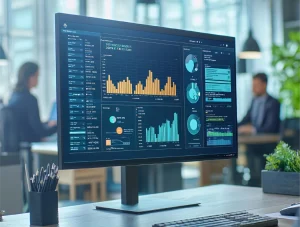
The retail sector confronts exponential data proliferation across interconnected digital ecosystems, where traditional data processing methodologies prove inadequate for enterprise-scale operations. The global retail analytics market itself is a testament to this shift, with projections indicating substantial growth; for example, one analysis projects the “Big Data Analytics In Retail Market” to expand from USD 46.31 billion in 2024 to USD 136.46 billion by 2034, at a CAGR of 11.41%.
The global retail enterprises operate within complex technological landscapes encompassing legacy point-of-sale infrastructure, cloud-native e-commerce platforms, IoT sensor networks, and distributed supply chain management systems that generate continuous data streams requiring sophisticated analytical frameworks.
What is Big Data Analytics in the Retail Industry?
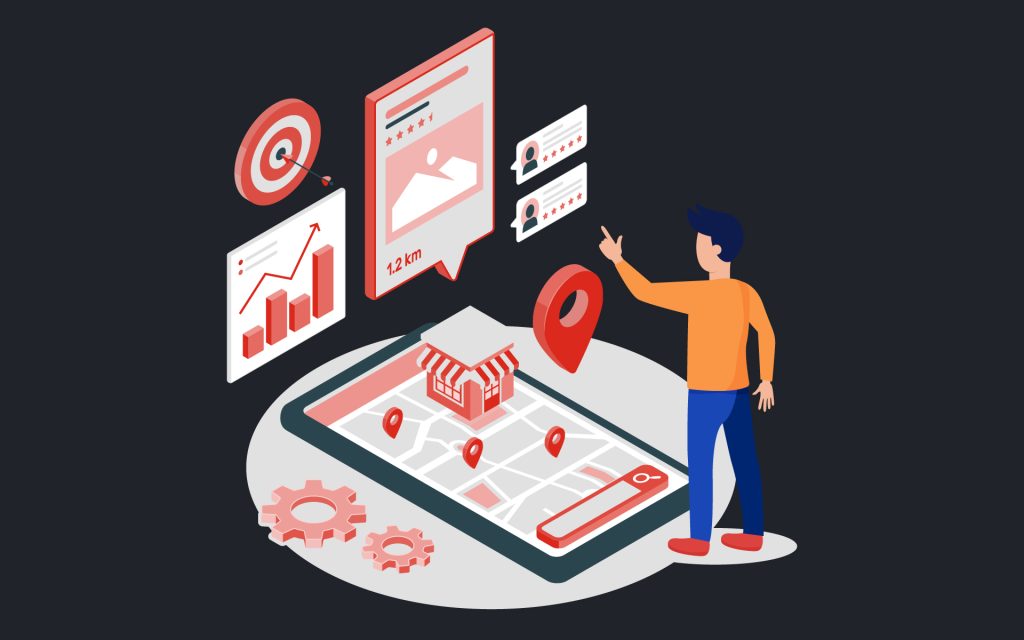
Big data analytics in the retail industry consists of the systematic collection, analysis and processing of substantial datasets from a variety of sources, which includes point-of-sale (POS) systems, e-commerce platforms, customer relationship management (CRM) systems, social networking and Internet of Things (IoT) products. The objective is to extract actionable insights that influence strategic choices across the retail value chain.
Importance of Data Analytics for Retail Business Success
According to the report by Barc, around 40% of companies worldwide are utilizing big data analytics, and many companies are leveraging the benefits of big data. The retail industry faces special challenges, including supply chain disruptions, inflationary pressures, and shifting customer preferences. Data analytics provides the visibility and agility needed to address these complexities and stay competitive. It allows retailers to
- Understand customer needs/preferences.
- Marketing and sales strategies improved.
- Manage inventory more effectively
- Adapt quickly to market changes.
Retailers who utilize big data and knowledge management in retail can stay ahead of competitors and better meet customer expectations than those who rely on guesswork.
Key Applications of Big Data Analytics in Retail
Case Study: Driving Growth and Innovation in Modern Furniture E-Commerce
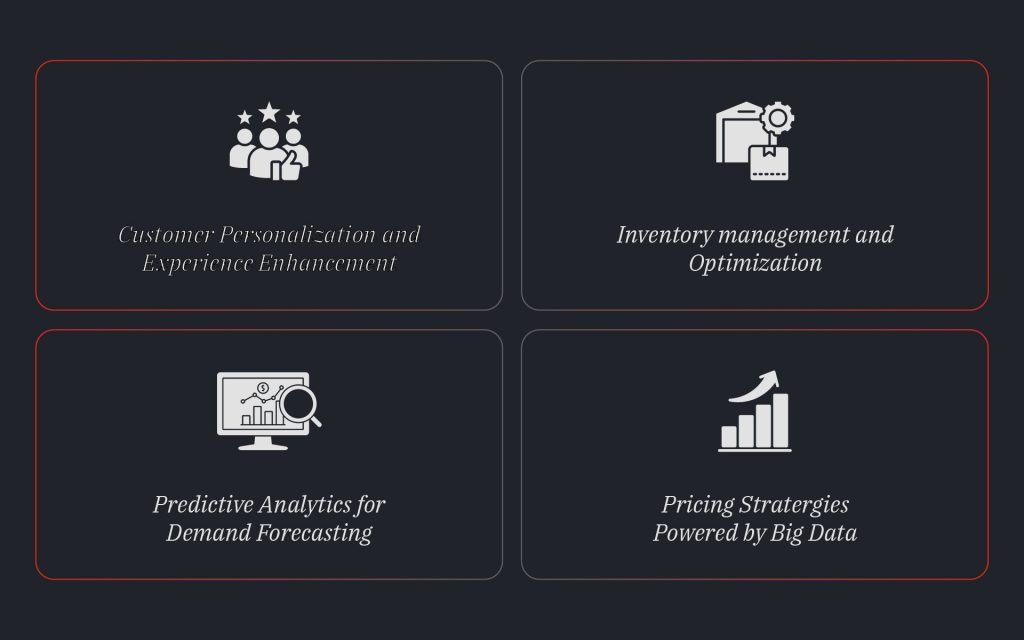
Customer Personalization and Experience Enhancement
Develop a customized experience for your customers by offering them targeted offers in addition to personalized recommendations based on their purchase history and individual preferences, thereby fostering loyalty and driving product sales.
Nike (USA): Through its Nike App and “Nike By You” platform, Nike delivers individualized product recommendations. This has driven digital sales to 35% of its total business, with personalized shoppers spending 30% more on average (Nike Annual Report, 2022).
Inventory Management and Optimization
Proper forecasting of demand and optimizing stock levels through the supply chain can bring down overstocking and stockouts. This becomes particularly relevant in the context of continuing supply chain uncertainty.
Walmart (USA): By integrating data from sales, inventory, weather, and social media, and using real-time and predictive analytics, Walmart reduced stockouts by 16%, improved inventory turnover, and cut logistics costs by 10%, contributing to a 2.5% increase in overall revenue (Transights Case Study , ResearchGate ).
Predictive Analytics for Demand Forecasting
Predictive analytics predict future demand from historical sales and current market trends. Knowing what customers want upfront enables retailers to plan for hectic seasons and advertising and avoid stockouts and excess stock.
Pricing Strategies Powered by Big Data
Retailers adjust prices to reflect demand, competitor pricing, and other factors. Such dynamic pricing allows stores to compete and profit.
Amazon (Global): Amazon is known to adjust its prices approximately 2.5 million times per day using algorithms that consider competitor prices, stock levels, demand, and market trends. While specific profit uplift from dynamic pricing isn’t public, 35% of its total revenue is attributed to its recommendation engine, often linked with pricing strategies (Brainforge.ai Blog , Business Insider 2021 cited by Number Analytics ).
Improving Supply Chain Efficiency
Analyzing information along the supply chain can identify delays, optimize logistics, and reduce the time and cost of getting products to stores. This can save costs and avoid stockouts.
Coupang (South Korea): Coupang’s AI-powered logistics network, supporting its “Rocket WOW” seven-hour delivery, has led to a 43% revenue CAGR (2018-2023) and approximately 14 million subscribers. Automated vehicles in fulfillment centers have cut walking and lifting for employees by about 65%.
How Big Data and Knowledge Management Are Transforming Retail Strategy
Big data and knowledge management in retail reveal hidden trends and patterns that enable retailers to segment customers more effectively and create targeted marketing campaigns. Such information drives better decisions, customer experiences and business strategies.
Benefits of Using Big Data Analytics in Retail Industry
Enhanced Decision-Making Capabilities
Data-driven insights help retailers make better product assortment, pricing, and marketing decisions. All this leads to better business results and faster market changes. A 2023 Gartner report revealed that 68% of retail executives attributed improved decision-making to the effective use of big data in retail.
Better Customer Insights and Segmentation
Big data helps retailers segment customers by analyzing shopping habits and preferences to enhance marketing and sales efforts.
Streamlined Operations and Cost Efficiency
Analytics across operations helps retailers improve processes, reduce waste, and cut costs. Efficient supply chains and inventory management save money! Barc report states that organizations using big data analytics have seen 8% rise in revenues and 10% decrease in costs.
Increased Sales and Profitability
Individual offers, optimized pricing, and accurate demand forecasting drive higher sales and better profit margins. The retailer targets high-value customers and avoids lost sales from stockouts. For example, retail giant Target utilized big data to predict customer needs, resulting in a 16% revenue increase in 2023.
How Retailers Gain Competitive Advantage Using Big Data Analytics
Retailers that use data analytics for retail business can adapt to market changes, provide better customer experiences, and make sound business decisions.
Challenges and Considerations in Adopting Big Data in Retail
Data Privacy and Security Concerns
Gathering and analyzing customer data presents privacy and security issues. Stores must protect customer information and comply with data protection laws to maintain customer trust.
Integration with Legacy Systems
Some retailers struggle to integrate new analytics tools with their legacy systems. If this is not managed effectively, it can lead to expensive and frustrating technology issues.
Managing the Volume, Velocity, and Variety of Data
Retailers work with vast volumes of data in various formats and from diverse sources. Storing, processing, and analyzing such data is challenging.
Skills and Talent Gap in Big Data Analytics
Finding employees who know retail data analytics is tough. Many businesses struggle to hire or train the talent to leverage big data analytics effectively.
High Implementation Costs and ROI Measurement
Setting up big data systems is expensive, and the return on investment is sometimes difficult to measure. Retailers must plan and track their analytics projects so they add value.
How TechBlocks Empowers Retailers with Cutting-Edge Big Data Analytics Solutions
TechBlocks provides retailers with sophisticated big data analytics tools for operational efficiency, tailored customer experiences, and informed decision-making. TechBlocks uses cloud-native platforms, real data insights, AI-powered analytics, and inventory and supply chain management tools to enable omnichannel experiences. Our solutions guarantee strong security and low costs while allowing for fast innovation and scalability, so stores can respond to consumer needs and market trends. TechBlocks is a trusted partner for North American retailers trying to lead in the digital age.
Conclusion
Big data analytics has revolutionized the global retail industry, allowing businesses to make data-driven decisions that promote sustainable growth, customer engagement, and profitability. Retailers today need to adopt a strategic approach to data analytics in order to remain competitive and address the challenges posed by the evolving retail landscape.
FAQs About Big Data Analytics in the Retail Industry
Analytics in retail is critical as it helps retailers collect, analyze, and interpret huge amounts of information to locate patterns and trends. This will enable them to make more informed strategic decisions, market more effectively, improve operations and profitability, and increase sales.
Data analytics helps retailers understand customer behavior and preferences to have personalized product recommendations, targeted offers, and smooth omnichannel experiences. This personalization increases customer satisfaction, loyalty, and long-term value.
Big data enables retailers to predict demand more accurately, optimize stock levels and reduce overstocking and stockouts. Real-time visibility in the supply chain and inventory ensures the right product is available at the right time, increasing efficiency and customer satisfaction.