
Retailers are reaching an inflection point. Customers increasingly expect interactions to reflect their unique needs, not just their purchase history, but also their context, intent, and timing. Yet most brands still deliver generic journeys across channels, missing the opportunity to build deeper trust and long-term loyalty.
Hyper-personalization in retail, in this context, isn’t just about targeting anymore. It’s about using AI to sense, adapt, and respond in real time, at every digital and physical touchpoint. When done right, it turns fragmented journeys into cohesive, memorable experiences that drive both engagement and revenue.
This article explores how hyper-personalization is reshaping retail and how brands can turn data into a meaningful and personalized retail experience to increase customer value.
How AI Drives Personalization in Retail
Artificial intelligence is the core engine powering personalized retail experiences. With this approach, retailers move beyond broad segmentation and deliver AI-driven personalization in retail, reaching each shopper with the right offer at the right time across the right channel.
The advantages of adopting this approach are clear:
- Delivering product recommendations online that feel uniquely relevant
- Sending location-based offers that enrich the personalized in-store experience
- Automating personalized emails and campaigns that increase engagement rates
- Using predictive models to anticipate future needs and suggest next-best actions
- Streamlining campaign design so teams spend less time guessing and more time innovating
The result of personalized customer experience in retail is a measurable lift in conversions, stronger loyalty, and faster ROI. For marketers and CX teams, AI turns personalization from a manual, reactive process into a scalable system of intelligence.
Also Read: Leveraging Consumer Data and Predictive Analytics to Personalize Shopping Experiences
Creating the Best Personalized Retail Experiences
Shoppers today expect tailored journeys, whether they walk into a store, browse online, or switch between the two. With hyper-personalization in retail, every interaction becomes an opportunity to delight and retain customers.
Reimagining the In-Store Experience
The physical store is no longer just a place to transact. It has become a stage for immersive and personalized in-store experiences where digital and physical worlds converge. Retailers are turning to AI, sensors, and real-time data to elevate service and create memorable moments.
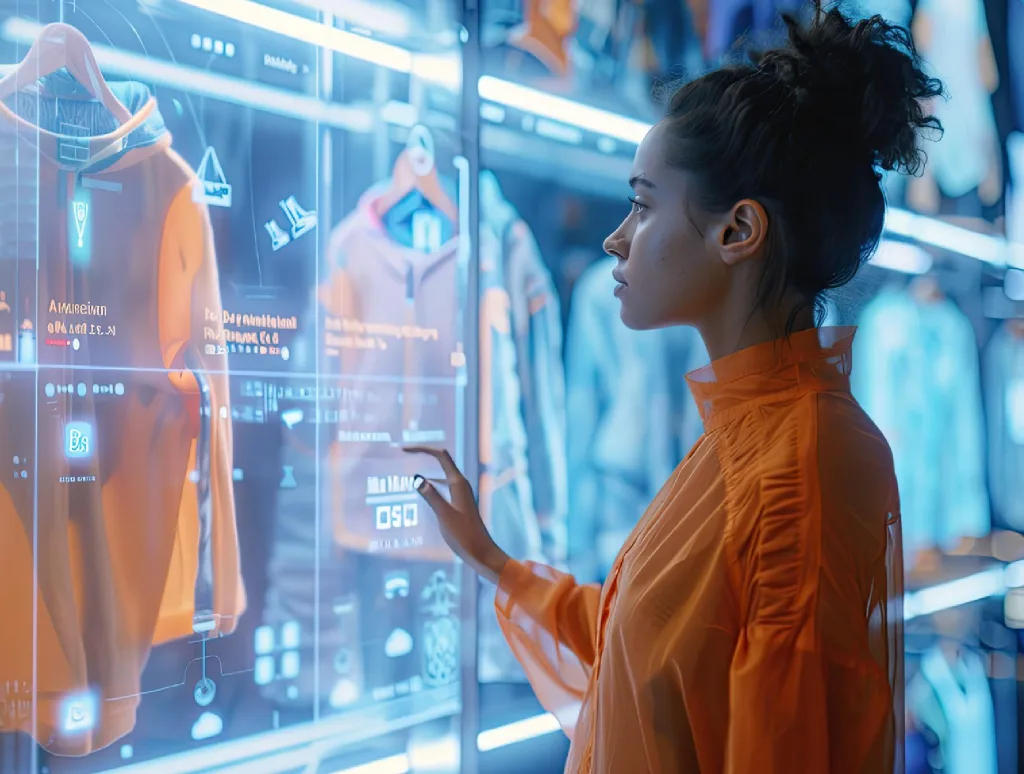
- Smart mirrors and digital kiosks: Allow customers to try products and receive AI-powered recommendations virtually.
- AI-empowered associates: Staff can access unified customer profiles, like purchase history, preferences, and loyalty status, to offer tailored recommendations on the spot.
- Interactive smart displays: Smart mirrors, AR kiosks, and guided screens allow shoppers to try, compare, and customize products virtually, blending convenience with discovery.
- Context-aware engagement: Location technologies, such as beacons, deliver personalized promotions and recommendations based on a customer’s exact location within the store.
Elevating Online and Omnichannel Journeys
While stores are evolving, digital journeys remain the backbone of personalized customer experience in retail. AI-driven systems enable brands to deliver precision at scale, ensuring shoppers see what is relevant to them in real time.
- Dynamic website experiences: Page layouts and product categories adapt instantly to browsing history and intent.
- Predictive recommendations: AI anticipates needs, surfacing products even before the shopper types a search.
- Omnichannel consistency: A customer who browses online finds the same personalized offers waiting in-store or on mobile, creating one unified journey.

With challenges addressed, the natural next question is what lies ahead. Retail leaders must anticipate the trends that will shape personalization in the years to come.
Future of Hyper-Personalization in Retail
The next phase of hyper-personalization in retail will be defined by intelligence, context, and scale.
For example:
| Trend | |
| Context-aware personalization | Experiences shift from static profiles to real-time context, adapting offers based on mood, weather, or current activity |
| Predictive engagement | Retailers anticipate intent before it’s expressed, creating personalized retail experiences that reduce decision fatigue |
| Emotional AI | Sentiment and behaviour analysis will refine personalized customer experiences in retail, adding empathy to automation |
| Phygital convergence | Digital intelligence augments stores with adaptive layouts, AR fitting, and personalized in-store experiences that mirror online journeys |
| Ethical data ecosystems | The future of hyper-personalization in retail will rely on transparent data sharing and customer-controlled privacy settings |
Case Study: Re-Engineering The User Experience For The Growth Of An Award-Winning Brand
Conclusion
Looking ahead, personalized retail experiences will move far beyond simple recommendations. AR and VR will redefine the personalized in-store experience, enabling shoppers to visualize products in real-time. Context-aware AI assistants will guide customers fluidly across online and offline touchpoints. At the same time, social commerce will deliver feeds that blend discovery and purchase in ways that feel intuitive, immersive, and engaging.
TechBlocks enables retailers to bring this vision to life. Through Digital Commerce solutions, TechBlocks helps enterprises design hyper-personalized, connected shopping journeys. With expertise in unified commerce platforms, omnichannel retail, and AI-driven personalization in retail, TechBlocks empowers brands to create experiences that drive loyalty, streamline operations, and deliver measurable growth.
Ready to elevate your retail strategy with AI-driven personalization?
Contact us today!
FAQs on Hyper-Personalization in Retail
By tailoring offers and experiences to individual needs, hyper-personalization builds stronger emotional connections. Shoppers are more likely to return when they feel understood.
Core enablers include machine learning models, real-time analytics, recommendation engines, predictive algorithms, and generative AI for adaptive content.
Yes. Affordable AI tools for product recommendations, automated email personalization, and loyalty programs make personalization accessible to even small businesses.
Shoppers are more engaged when in-store experiences reflect their preferences. This increases basket size, reduces churn, and improves overall satisfaction.