

Regulated industries face relentless change. New rules land weekly, penalties make headlines, and manual audits can’t keep pace. In 2025, 77% of executives say regulatory complexity has already hurt their business by slowing launches, delaying approvals, and adding cost.
In this scenario, AI-powered compliance automation lets systems handle routine checks, alerts, and reports, so your team can focus on decisions, not data entry. With rules changing constantly, automation keeps you ahead, accurate, and out of headlines.
This guide shows how intelligent automation turns compliance from a checklist into a living system: controls run continuously, risks surface early, and reports write themselves.
Importance of Compliance in Regulated Industries
In industries like energy and utility, non-compliance is a financial and reputational liability. In 2024 alone, GDPR penalties topped EUR 2.3 billion, with individual firms like Meta fined hundreds of millions.
Manual compliance processes can’t scale to today’s complexity. Automated compliance solutions help organizations stay aligned with laws while cutting down the costs of audits, reporting, and investigations.
How AI Transforms Compliance Management
Compliance management software is the backbone of automation. It consolidates all compliance-related tasks into a single system that integrates with existing ERP, CRM, and HR platforms.

Key Features of Automated Compliance Solutions
Regulatory compliance automation saves businesses a fortune sometimes. Other than that, its other features are:
Streamlining Compliance Process Automation
Compliance process automation uses workflow orchestration to reduce repetitive manual tasks.
| Process | Manual Approach | Automated Approach |
| Policy tracking | Spreadsheets & emails | Real-time monitoring via an AI engine |
| Audit preparation | Weeks of manual data collation | Instant, audit-ready reports |
| Risk assessment | Ad hoc interviews & notes | Predictive analytics flagging weak areas |
Reducing Human Error and Enhancing Accuracy
Errors in manual compliance often lead to penalties. For example, in utilities, inaccurate reporting of safety inspections can trigger fines under NERC CIP regulations. Automated compliance solutions minimize errors by validating every data point against rules before submission.
Case Study: Integrated Digital Platform Engineering for Pharma and Clinics
Real-World Applications in Regulated Industries
Businesses in these domains are turning to intelligent automation, real-time monitoring, and secure infrastructure to ensure regulatory alignment without compromising efficiency. Key applications include:
| Retail | AI-driven data governance, automated consent management, real-time privacy monitoring |
| Energy & Utility | Compliance dashboards, anomaly detection, and continuous access monitoring |
| Mining | Automated safety reporting, sensor-based worker tracking, ESG compliance analytics |
| Digital Health | Real-time audit trails, policy enforcement engines, breach detection, and response systems |
Challenges and Best Practices
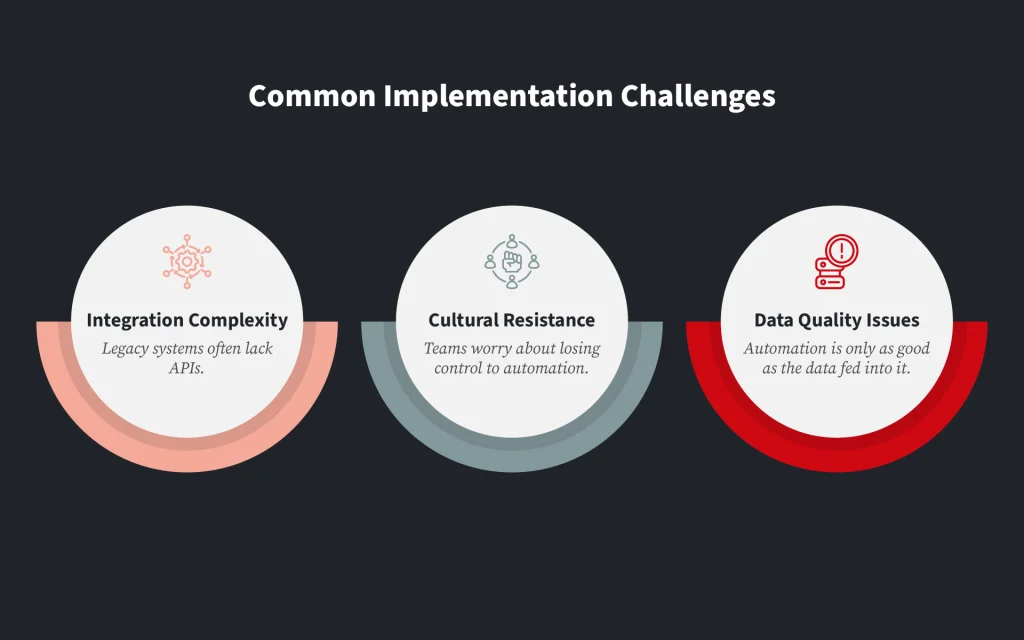
Adopting compliance automation is not without hurdles. Recognizing these obstacles early and applying proven best practices can make the difference in your decisions:
Tips for Successful Compliance Automation
A structured approach can overcome these barriers.
- Start small. Pilot one process before scaling.
- Align with IT and risk management.
- Train teams to work alongside automation.
- Look for compliance management software with strong API and AI integration capabilities.
Future of Compliance Automation
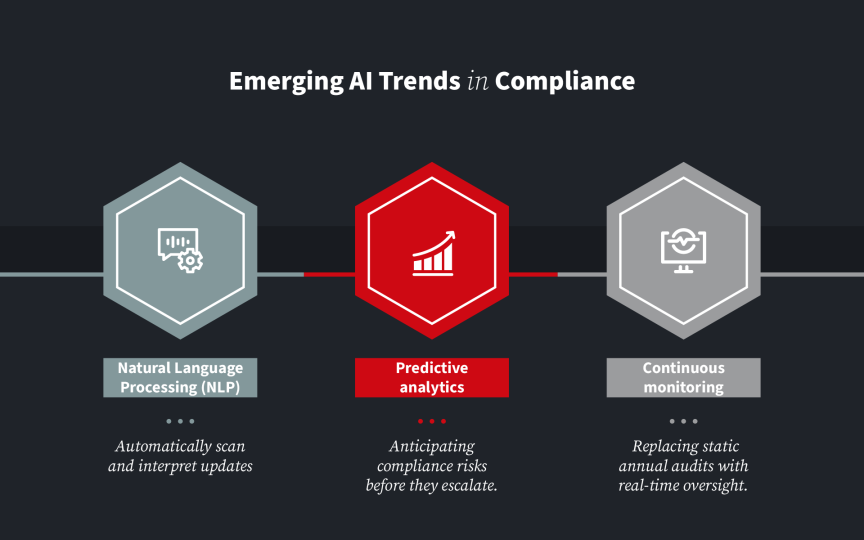
As regulations multiply and grow more dynamic, AI will redefine how organizations manage compliance. Early adopters are already shifting from reactive audits to proactive, always-on compliance systems that anticipate risks.
How Businesses Can Stay Ahead
Companies that invest early in compliance automation gain agility. Partnering with TechBlocks’cloud consulting and AI & data analytics teams enables organizations to embed regulatory compliance automation into daily workflows, reducing risk, saving costs, and ensuring long-term resilience.
Also Read: Why Digital Transformation is no Longer Optional
Conclusion
Compliance is a strategic advantage. Automating compliance processes improves operational efficiency, reduces human error, and provides real-time insights that help organisations stay ahead of regulatory change.
TechBlocks helps enterprises in Energy and Utility turn compliance into a strength. With AI-powered compliance management that seamlessly integrates into your existing ecosystem, TechBlocks enables smarter monitoring, faster response, and significant cost savings. Their deep expertise across regulated industries ensures your operations stay agile, auditable, and future-ready in an environment of constant change.
Simplify compliance and strengthen your resilience through intelligent automation.
Partner with TechBlocks today.
FAQs on Compliance Automation
Manual compliance relies on human input, spreadsheets, and periodic audits. Compliance automation leverages AI and software tools to continuously monitor, enforce, and report compliance, reducing both time and risk.
They cut repetitive tasks, reduce reporting errors, and ensure faster audit preparation. Businesses save weeks of manual effort and significantly lower the risk of regulatory fines.
Industries with heavy regulations, such as retail, energy and utilities, financial services, and healthcare, see the most impact, as penalties for non-compliance are steep and operations are complex.
Yes. Modern platforms are built with APIs and middleware, enabling integration with ERP, CRM, HR, and IoT systems. This ensures compliance data is accurate and consistent across all business functions.